

The Sabbath was a gift before it was a law
Whinsky Alkema on where the word first appears, what God was teaching with a pot of rotten manna, and why the day can never be about who has it right.
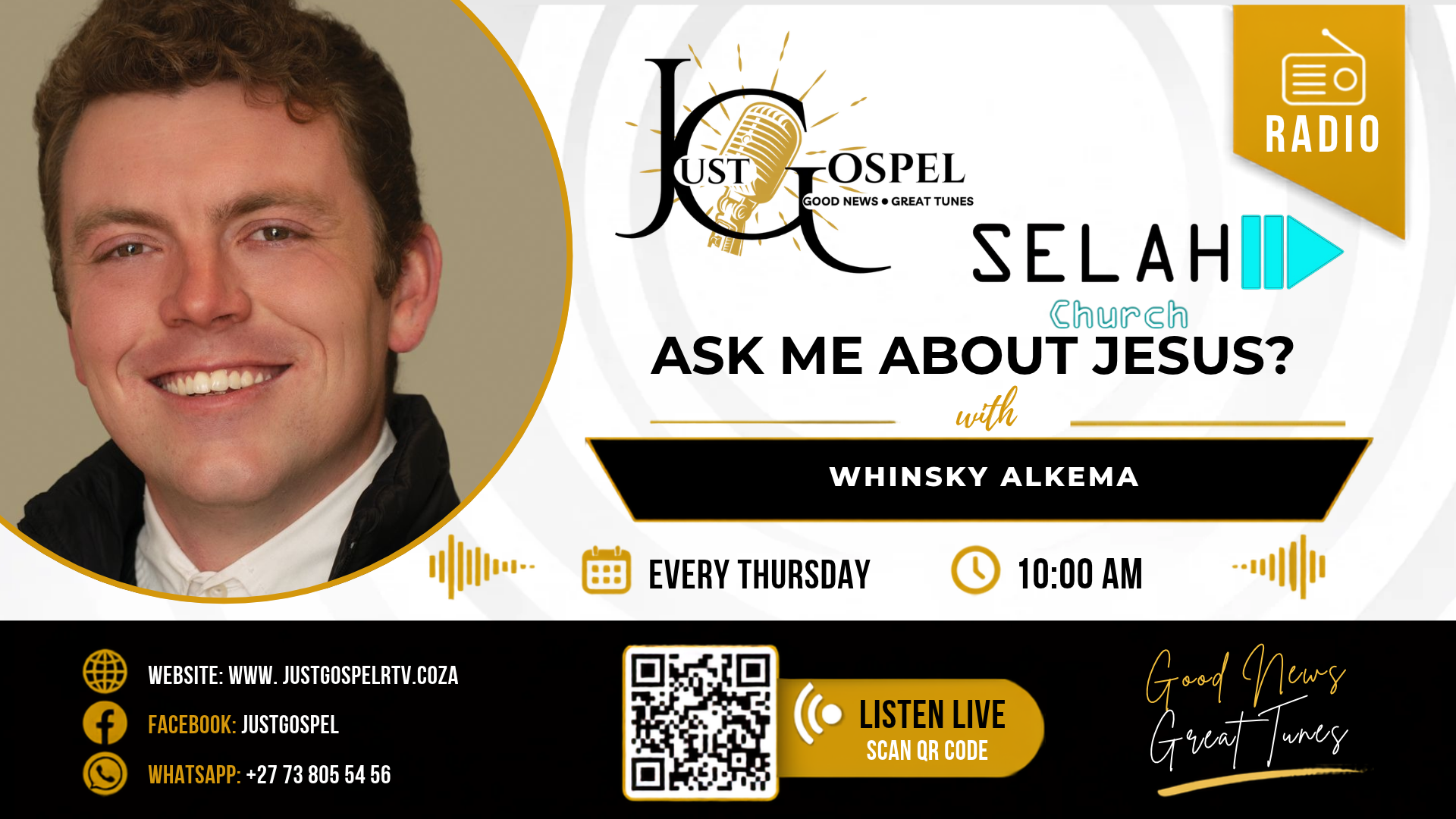
On Ask Me About Jesus, Whinsky Alkema opened a series on the Sabbath, the day many Christians argue about and few have actually studied. He took us back past the Ten Commandments to Exodus 16, where the word first appears, and made the case that the Sabbath was given to people as a gift of trust before it ever became a rule. This is part one of three, and he was upfront that we barely got started.
It began with a message I forwarded to him earlier in the week, one of those long ones telling believers to stop going to church on a Sunday. The very next day he was added to a different group insisting the Sabbath has to be kept on one specific day. Neither of us thinks that is a coincidence, so we put it on air and invited every one of those people to listen in.
Whinsky was clear about the shape of the thing before he began. Churches in our own area keep the day differently. One group starts its Sabbath on Friday at six in the evening and runs through, others keep a full Saturday, and many of us worship on Sunday. He wanted to give an overview of what the Sabbath is, how God speaks about it, and what applies to a born again believer, without taking a denominational side. His rule is the one he keeps repeating on this show: go back to the Word, and test every epiphany against it.
Finished is not the same as stopped
We prayed, and then he went straight to Genesis 2. Most of us read that God made everything in six days and on the seventh simply stopped. Whinsky does not read it that way. The Hebrew word behind “finished” carries the sense of completion, the perfecting of something, and he used the image of a grand piano. The woodworkers and the string makers do their part, and then the finisher arrives to put the veneer on the keys. Seven, he said, is the number of that completeness, and it runs all through Scripture.
“And God blessed the seventh day, and sanctified it: because that in it he had rested from all his work which God created and made.”Genesis 2:3 (KJV)
The word for sanctified is the same one that means to set apart, to make an exception. And this is before Moses, before Sinai. He made the point that tithing also predates the Mosaic law, and then turned to what he sees a lot of modern Christians doing. We are happy with one God, no idols and no blaspheming, but when we reach the fourth commandment it suddenly belongs to the old covenant. He thinks that is dangerous, because the Ten Commandments are moral law, given to everyone and not only to the Levites.
Where the word first shows up
Then he asked me where I thought the word Sabbath first appears, and I said Genesis, obviously. Wrong. It is not there. Genesis gives us a day of rest that God set apart, but the word itself comes in Exodus 16, four chapters before the Ten Commandments are given in Exodus 20. The people gather double bread on the sixth day, the leaders come to Moses, and he tells them tomorrow is a day of solemn rest. Anything they had tried to keep from the manna before that rotted and filled with worms. This time it did not.
His reading is that God was teaching them. They had already seen the manna spoil overnight, and now here was the exception, and it came with a miracle. When some went out looking on the seventh day and found nothing, the Lord said to Moses that he had given them the Sabbath. He used the word given.
The Sabbath day was a day of trusting the Lord.
Whinsky AlkemaThat changes the picture for a lot of people, me included. We tend to hear Sabbath and think of a rule that brings trouble if we break it. Whinsky says to look again. Collecting twice as much on the sixth day was an act of faith, that the provision would hold and that I do not have to push every single day.
Why the punishment was so severe
We spent a while in Exodus 31, where the Sabbath is called a sign between God and Israel, and where breaking it carries the death penalty. He did not dodge that. His answer is that sin is not only the breaking of a list of rules. It is a posture of the heart, and the word itself means falling short, missing the mark. He asked me what I drive, and I said diesel, so he gave me the diesel example. Nowhere does the Bible say do not put petrol in a diesel car, but you know what happens if you do. In the Old Testament, he said, God let the result show immediately so people could see what sin costs. Adam and Eve took the bite and felt nothing at first, and still death entered.
“It is a sign between me and the children of Israel for ever: for in six days the LORD made heaven and earth, and on the seventh day he rested, and was refreshed.”Exodus 31:17 (KJV)
So why die for working on the Sabbath? Because the Sabbath was about trust, and to give up that trust for anything else is to give up the relationship. He tied it to seeking first the kingdom of God, and pointed out that Deuteronomy 5 adds a second layer. The Sabbath is also a remembrance that you were a slave in Egypt, and Egypt, in the New Testament, stands for sin. We keep it to remember we were set free.
He also spoke gently about people who are still stuck in sin. We should not look at them and think what a terrible person. We should feel sorry for them, because they are suffering whether they know it or not.
Not the Baptists, not the Adventists, not me
The last stretch was Isaiah, and it was the part I was glad we reached. In Isaiah 1 God says he hates the new moons and the Sabbaths. Not because he did not put them in place, but because people were coming to his courts with iniquity and a sense that at least we are better than those people. Isaiah 58 says the same about fasting: you seek your own pleasure, you oppress your workers, you fight, and then you wonder why heaven is silent. The fast God chooses is to loose the bonds of wickedness and share bread with the hungry.
Never at the cost of anyone.
Whinsky Alkema on the Sabbath
His closing was plain. When we set a day apart, the time is for God. If I use it to prove that my day is right, or to say you Baptists, you Adventists, I have missed it. He said every time we bring in denominational shifts we are showing immaturity. And if your family rocks up on that day, he said, it is good to have them there.
We ran out of time long before we ran out of material. There will be a part two and a part three over the next two weeks. If something was left out that you wanted covered, send us a WhatsApp on 073 805 5456 or comment on the JustGospel Radio Facebook page, where we posted the question on Tuesday.
Quick Answers
Who is Whinsky Alkema?
Whinsky Alkema is the apologetics teacher on Ask Me About Jesus, the JustGospel Radio show about giving an answer for the hope within us. In this episode he began a multi-part overview of what the Bible says about the Sabbath.
Where does the word Sabbath first appear in the Bible?
According to Whinsky Alkema, the word Sabbath first appears in Exodus 16, before the Ten Commandments were given in Exodus 20. Genesis 2 describes God resting on the seventh day and making it holy, but the word Sabbath is not used there.
Was the Sabbath a rule or a gift?
Whinsky Alkema taught that the Sabbath was given to people as a gift from God, a day of trusting Him for provision, before it was written into the Ten Commandments. He pointed to Exodus 16, where God provided double bread on the sixth day.
Does the fourth commandment still matter?
Whinsky Alkema argued that Christians cannot keep some of the Ten Commandments and set aside the fourth, because the commandments are moral law. He said Jesus did not lessen the commandments but intensified them, and he promised further episodes on how the Sabbath fits a born again believer.
When are the next parts of this series?
Whinsky Alkema said parts two and three of this Sabbath series will follow in the next two weeks on Ask Me About Jesus. Listeners can send questions by WhatsApp on 073 805 5456 or through comments on the JustGospel Radio Facebook page.
Whinsky Alkema
Apologetics · Ask Me About Jesus
Whinsky Alkema is the teacher behind Ask Me About Jesus on JustGospel Radio, a show built on the call to give an answer to anyone who asks about the hope within us. He loves etymology and the Hebrew roots of the words we use, and he keeps bringing every question back to Scripture.