

If it looks too good to be true, it probably is
Lindi Tshabangu and her panel on the fake goods in our shops, the crime behind them, and how to shop safely through Black Friday and Christmas.
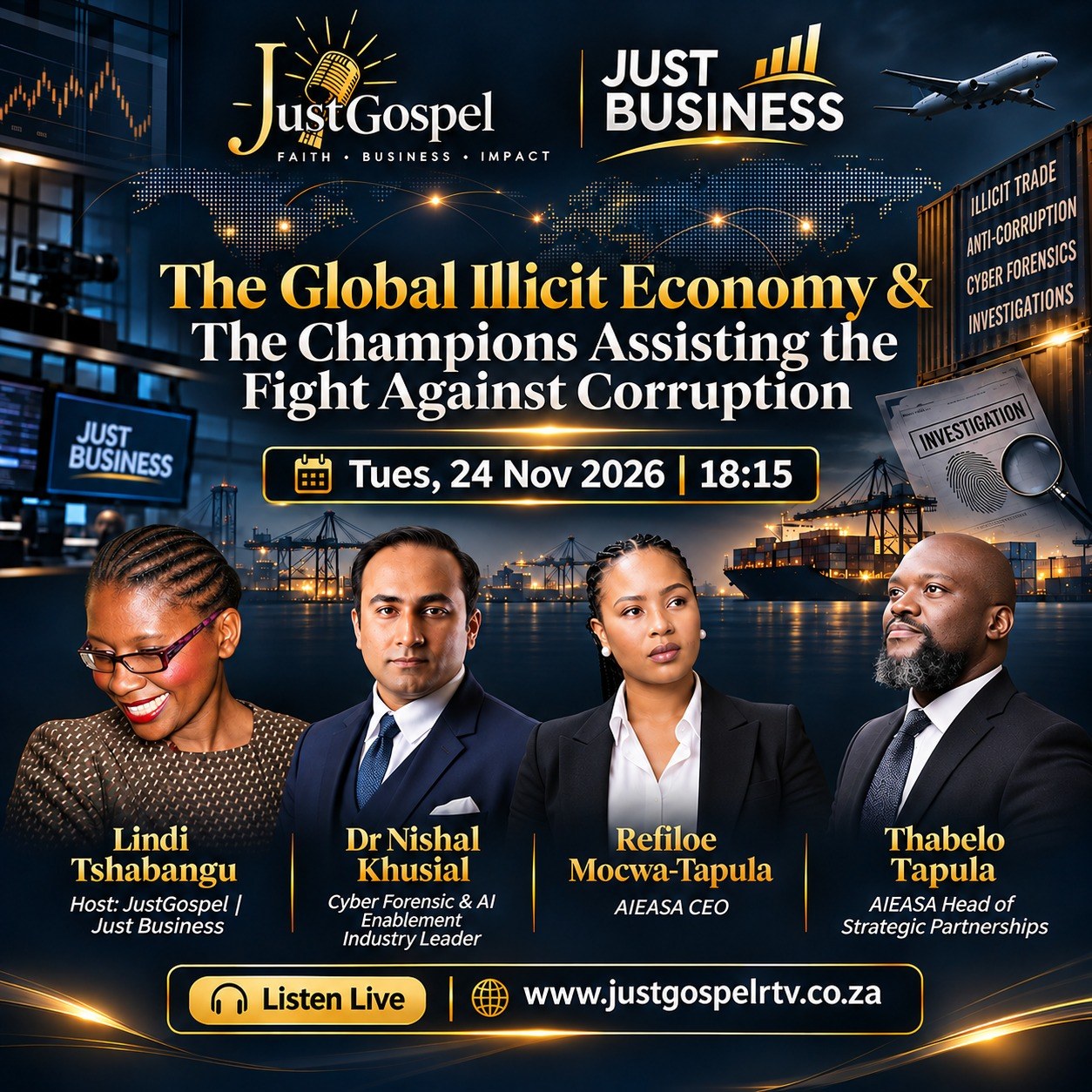
On Just Business on 24 November 2026, Lindi Tshabangu brought together forensics and AI specialist Dr Nishal Khusial and two leaders of the newly launched Anti-Illicit Economy Association of South Africa to talk about illicit trade. South Africa's illicit economy may be as large as 12 to 15% of GDP. The panel explained why it reaches every spaza shop, how it funds organised crime, and what shoppers should check before they buy this Black Friday and festive season.
Lindi opened the show admitting she did not really know what illicit trading was, and that she was looking forward to finding out. Her panel, she said, was like a rose bush: a couple of handsome thorns and one beautiful rose. Listeners had tuned in from Germany, the UK, Lesotho and Finland as well as South Africa.
It is not someone else's problem
Lindi's first question was the one a small-business owner would ask. Is this big phrase, illicit trading, really relevant to an SME or a spaza shop?
Dr Khusial, a cyber forensic and AI enablement industry leader who heads forensics and artificial intelligence at a UAE-based firm, said it touches every part of the economy. It is not only fake luxury goods. It runs from illicit cigarettes into illicit mining and money laundering. A counterfeit, he explained, is a replica of the original that infringes on its rights and moves through its own illegal supply chain. The buyer gets none of the protection the original carries, because the copy is made as cheaply as possible and to no standard at all.
That is where it becomes dangerous. A counterfeit consumable can contain poison. He listed alcohol, honey, toothpaste and washing powder among the products being tampered with.
R800 billion to R1.2 trillion
South Africa’s illicit economy, roughly 12 to 15% of GDP, as told to Parliament by the SARS commissioner
"What?" was Lindi's reaction to the number.
Why we buy the fake anyway
Lindi was honest about our habits. As South Africans, she said, we often knowingly buy counterfeit or black-market goods, like downloading a film for free before it has even reached our cinemas, because it is cheap and because the cost of living is high. So why is it so hard to just pay the price?
Refiloe Mocwa-Tapula, the association's CEO, gave two reasons. The first is awareness: most people do not know the harm it does to society and to legitimate businesses. The second is a morality issue. Those who know often don't care, and those who care often don't know enough. And the harm spreads, because one industry always ties into another.
Lindi reached for an Afrikaans word, oogklappe, the blinkers on a racehorse that stop it looking sideways. That, she said, is why it makes sense that the association was set up to work across industries rather than one at a time.
Who is fighting it
The Anti-Illicit Economy Association of South Africa describes itself as an independent platform that brings businesses, government, regulators, law enforcement and communities together. Thabelo Tapula, its head of strategic partnerships, said it represents the 12 industries most affected by illicit trade, from alcohol and tobacco to food and natural health products, and that those industries sit on its board so they can design awareness programmes with government.
In the month since it launched, he said, the association has partnered with the SABC and engaged Proudly South African to spread the message. It has signed an agreement with Brand Integrity Intelligence Corporation, whose technology identifies illicit products before they reach the shelves, and works with SAPS, the National Prosecuting Authority, SARS and the Border Management Authority so that the people behind the products face prosecution.
He was blunt about why awareness matters. He pointed to the children in Soweto who died after eating contaminated snacks, and the four farm workers who died a few weeks ago after drinking a contaminated alcoholic drink.
We can't call this a victimless issue. It harms consumers, it costs legitimate businesses and it weakens public institutions.
Refiloe Mocwa-Tapula, CEO, AIEASANot a victimless crime
Lindi raised what she had heard at the association's launch: that counterfeit and smuggled goods are tied to violent organised crime, human trafficking and money laundering. Dr Khusial walked through how it works. A syndicate picks a commodity, sells the replica for maximum value at minimum cost, and then launders the proceeds so the money looks legitimate. Whole syndicates, he said, are funded this way, across many countries at once.
One point stood out. Face to face, he hoped, a person would think twice before selling something poisonous to the person in front of them. Online marketplaces remove that human moment. The transaction loses its sense of responsibility, and syndicates can move from local to global.
Technology cuts both ways
On AI, Dr Khusial described two sides. Criminals use artificial intelligence, digital marketplaces and sophisticated financial systems to work at a speed and scale that geography once limited. On the other side, he said, the same technology can be used to defend, protect and nurture. Society often plays catch-up, and what is needed are champions on the right side of the coin.
Lindi brought it home with the season's biggest worry: deepfakes. You may see a video of the president asking you to deposit R10,000 into an account, she said, and believe it because he looks and sounds like him. Dr Khusial agreed that counterfeiting now includes digital identities used to trick people out of their money, and urged listeners to check that a website address is the real one before they buy.
What to check before you buy
With Black Friday close, Lindi asked Refiloe for practical tips. The price, she said, is always a dead giveaway: if it is far below what that product normally costs, something is wrong. Buy from legitimate, registered businesses. Ask for authentication or certificates. Check for SABS approval, check the expiry date, and look at the material and the printing. Scammers are good at copying, but they still miss a font or get a colour slightly wrong. Lindi added one more at the end of the show: look at the QR code and check that it is genuine.
Online shopping makes all of that harder, Lindi pointed out. The delivery scooter has already driven away by the time you look at the product. Thabelo said the association is already working with the three major retailers on ways to tell genuine products from fakes when you buy online, and that in the first quarter of next year it will launch Protect South Africa, a public awareness and training campaign run jointly by business and government.
Dr Khusial's parting shot was two words, vigilance and education, and a reminder that there is always a hidden cost to a bargain that seems too good to be true. Sometimes, he said, that cost is far more than the few extra rand the real thing would have cost.
Lindi closed with the reason it matters. Avoiding illicit goods is not really about protecting big brands. It is about keeping dangerous fakes out of our homes, and making sure the people behind them pay their taxes like everyone else. As she put it, don't think that because you run a spaza shop it doesn't affect you. It does.
Report illicit trade
Anti-Illicit Economy Association of South Africa
Reporting and partnership enquiries
The association asked anyone with information about counterfeit or illicit goods, and any business or institution that wants to partner with it, to get in touch.
Quick Answers
What is illicit trade?
Illicit trade is the making and selling of goods outside the law, including counterfeit replicas that infringe on the original brand. Counterfeits move through their own illegal supply chains and are not made to any safety standard, so the buyer has none of the protection of the original product.
How big is the illicit economy in South Africa?
Dr Nishal Khusial quoted the SARS commissioner telling Parliament that South Africa's illicit economy is around R800 billion to R1.2 trillion, roughly 12 to 15% of GDP.
How can I tell if a product is counterfeit?
Check the price first: if it is far below the usual price, something is wrong. Buy from registered businesses, look for SABS approval and expiry dates, check the material and the printing for wrong fonts or colours, and check the QR code.
Does illicit trade affect small businesses and spaza shops?
Yes. The panel said illicit goods reach every level of the economy, from spaza shops to corporates, including everyday products like honey, toothpaste, washing powder, snacks and alcohol.
The panel
Just Business · 24 November 2026
Dr Nishal Khusial is a cyber forensic and AI enablement industry leader based in the UAE, and a regular guest on Just Business. Refiloe Mocwa-Tapula is the CEO, and Thabelo Tapula the head of strategic partnerships, of the Anti-Illicit Economy Association of South Africa (AIEASA), which launched about a month before the show.
Show page: justgospelrtv.co.za/just-business